
How to Select the Right Dual Servo Drilling spindle for Precision Small Hole Drilling
How to Select the Right Dual Servo Drilling Power Head for Precision Small Hole Drilling
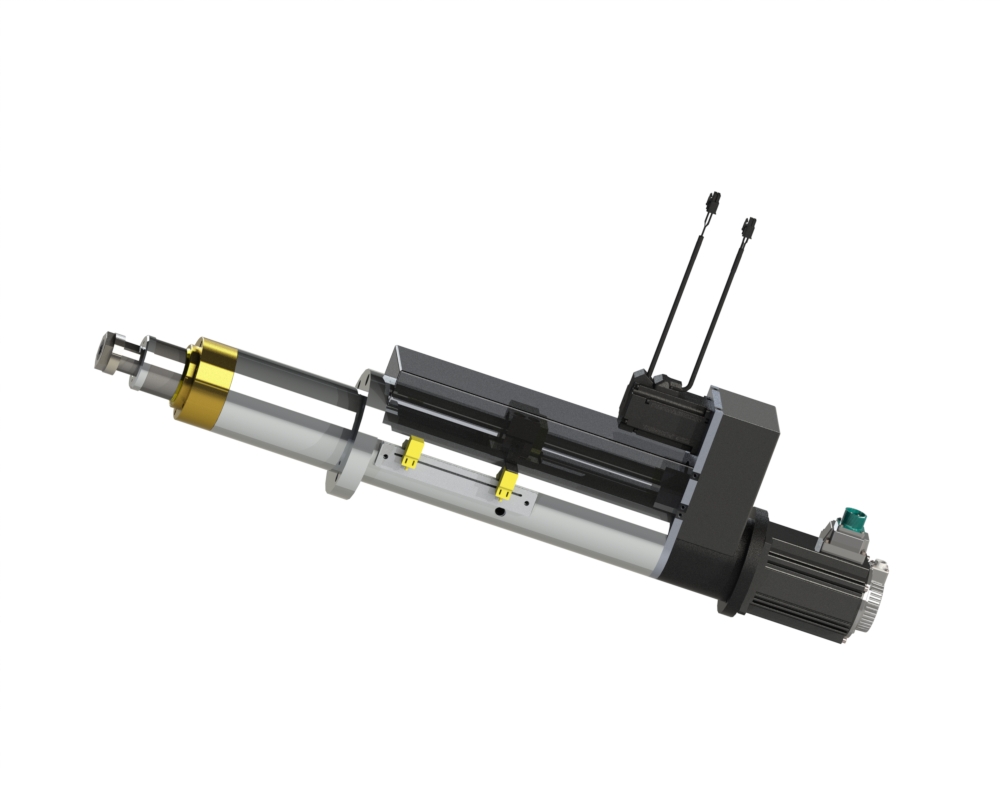
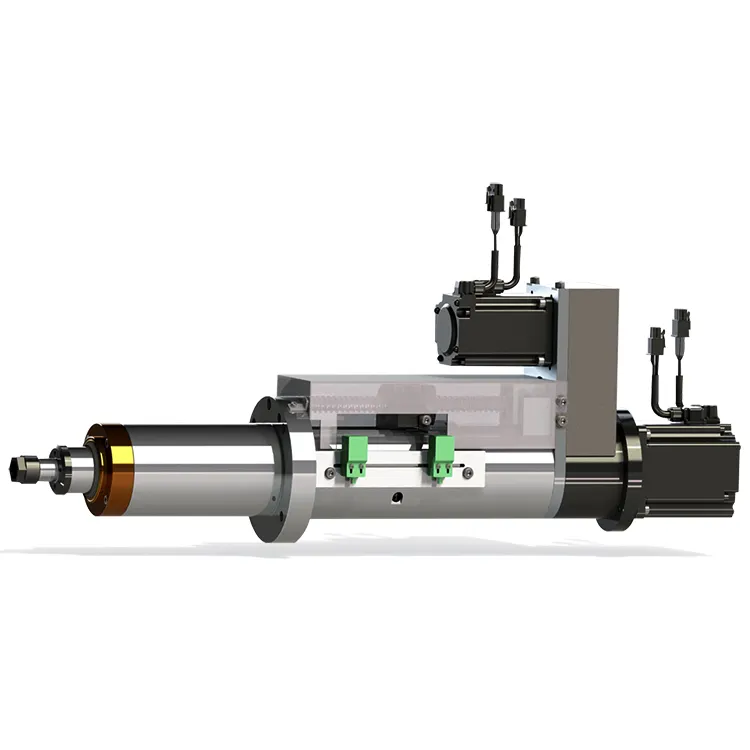
Small hole drilling is one of the most demanding precision machining processes in modern manufacturing, widely applied in aerospace parts, electronic components, automotive precision fittings, hardware molds, ceramic and graphite workpieces, and medical device production. Unlike conventional large-diameter drilling operations, small hole machining usually involves tiny hole diameters ranging from 0.1mm to 3.2mm, requiring extremely high drilling accuracy, stable spindle operation, precise feed control, and consistent repeat positioning accuracy. Even minor fluctuations in spindle speed, unstable feed propulsion, insufficient structural rigidity, or poor depth control will directly lead to drill bit breakage, hole position deviation, hole wall burrs, dimensional out-of-tolerance, and mass product scrapping. Among all drilling driving equipment, the dual servo drilling power head has become the core preferred equipment for small hole precision drilling, completely different from single servo or pneumatic drilling power heads. It adopts an independent dual servo control structure, with one servo motor responsible for spindle rotation drive and another dedicated servo motor controlling linear feed propulsion, realizing independent and stepless adjustable regulation of spindle speed and drilling feed speed respectively. Choosing a suitable dual servo drilling power head tailored to small hole working conditions is the key foundation to ensuring machining yield, improving production efficiency, and reducing subsequent processing and maintenance costs. This article will elaborate on the core selection criteria and key practical considerations for matching a professional dual servo drilling power head for small hole drilling from actual machining application scenarios.
1. Prioritize Dual Servo Independent Control Performance for Small Hole Machining Characteristics
The biggest core advantage of a dual servo drilling power head compared with single servo and ordinary pneumatic drilling heads lies in its completely independent speed and feed dual regulation system, which is also the primary prerequisite for stable small hole drilling. Small hole drilling has extremely strict matching requirements between spindle rotation speed and feed rate: tiny drill bits have small diameter, weak rigidity, and poor impact resistance, so high-speed spindle rotation must be matched with micro, uniform, and stable slow feed propulsion. If the spindle speed and feed are linked and cannot be adjusted independently, it is easy to cause excessive feed pressure, resulting in instant breakage of fine drill bits, or uneven feed leading to rough hole walls and obvious drilling deviations.
When selecting, first verify the dual servo drive configuration of the power head. It must be equipped with a matched high-response servo spindle motor and a dedicated servo feed motor, rather than a single servo motor with simple power distribution. The supporting servo driver needs to support precise parameter setting, real-time speed closed-loop control and torque adaptive adjustment, which can effectively avoid drill bit damage and workpiece surface damage caused by torque fluctuation during small hole drilling. In actual selection, it is necessary to confirm that the equipment supports arbitrary switching of pure drilling mode and adaptive machining mode, and can freely set core parameters such as drilling starting speed, constant drilling speed, finishing feed rate and drilling retracting speed according to small hole specifications, realizing low-speed stable entry and high-speed retracting to balance machining precision and production efficiency.
2. Match Spindle Speed Range and Power Parameters According to Workpiece Material and Small Hole Diameter
Different workpiece materials and small hole diameter sizes directly determine the required spindle speed and motor power of the dual servo drilling power head, and mismatched power and speed parameters are the main cause of poor small hole drilling quality. For ultra-small holes with a diameter of 0.1mm to 1mm processed on hard materials such as stainless steel, alloy steel, ceramics and sapphire, the power head must support a high-speed stable spindle operation function, and the spindle speed range needs to reach up to 20,000 rpm to ensure smooth cutting of tiny drill bits and reduce drilling resistance. For small holes with a diameter of 1mm to 3.2mm processed on conventional materials such as aluminum alloy, copper, plastic and circuit boards, a medium-speed spindle of 3000 to 6000 rpm can meet the machining demand, avoiding excessive speed causing workpiece edge chipping.
In terms of power matching, do not blindly pursue high-power configuration. Excessively high spindle power will cause excessive cutting torque, which is not suitable for fragile small hole machining and easily leads to drill bit bending and fracture. It is necessary to select the spindle servo motor power and feed servo motor power in a targeted manner according to the maximum drilling capacity of the material. For example, small hole drilling on aluminum and other soft materials can choose a low-power matching model, while small hole deep drilling on steel workpieces needs to appropriately increase motor power while ensuring stable low torque output, to ensure sufficient drilling propulsion without damaging the drill bit. At the same time, check the spindle runout accuracy of the power head; the lower the spindle radial runout, the higher the small hole roundness and position accuracy, which is an indispensable core index for precision small hole processing.
3. Focus on Structural Rigidity, Positioning Accuracy and Drilling Depth Control Stability
Small hole drilling not only requires precise speed and feed control, but also puts forward extremely high requirements on the overall structural stability and positioning repeatability of the dual servo drilling power head. During high-speed small hole drilling, slight vibration or structural shaking of the power head will be amplified instantly, resulting in hole position deviation, inconsistent hole depth, and obvious burrs on the hole edge. When selecting, priority should be given to power heads with integrated high-rigidity body structure, made of high-quality cast iron or thickened industrial aluminum alloy material, with good shock resistance and structural deformation resistance, which can maintain stable operation for a long time under long-term continuous high-speed machining conditions.
In addition, precision transmission components are crucial to small hole machining quality. It is necessary to confirm that the power head is equipped with high-precision linear guides and ball screw transmission structures, to ensure smooth and no-jitter linear feed propulsion during drilling. At the same time, check the drilling depth control accuracy and repeat positioning accuracy parameters. Qualified dual servo power heads for small hole machining need to realize micron-level depth precise control, support accurate setting of drilling stroke, retracting position and secondary origin positioning, effectively avoid dimensional errors caused by repeated machining, and ensure consistent machining accuracy of each batch of small hole workpieces. For small hole deep drilling operations, it is also necessary to select a power head with a reasonable spindle travel range to meet the deep drilling demand while maintaining feed stability.
4. Verify Intelligent Programming Compatibility and Subsequent Maintenance and Adaptability
Modern small hole batch production is mostly matched with automated production lines and multi-station combined machining equipment, so the selected dual servo drilling power head must have good intelligent programming compatibility and expandable control performance. The power head system should support external PLC connection, multi-group machining parameter storage and one-key calling, which can quickly switch machining parameters for different small hole specifications and different workpieces, reducing parameter adjustment time and improving production line operation efficiency. At the same time, it should have overload protection, drill bit breakage alarm, overtravel protection and other safety protection functions, which can automatically stop the machine in case of abnormal drilling, reduce the loss of drill bits and workpieces, and improve the safety and stability of long-term continuous machining.
In addition to performance parameters, the later maintenance cost and on-site installation adaptability cannot be ignored. It is recommended to select standardized dual servo drilling power heads with simple structure, easy disassembly and replacement of wearing parts, and perfect after-sales service support. According to the on-site installation space of the production workshop and the matching requirements of multi-spindle combined drilling, select the power head with appropriate volume and installation size, to ensure seamless docking with automated equipment, multi-spindle fixtures and other supporting facilities, avoiding installation adaptation problems affecting the overall machining progress.
Conclusion
Precision small hole drilling machining is inseparable from a high-quality dual servo drilling power head, and the selection work should never blindly choose high-power or high-price products, but adhere to the core principle of matching working conditions, precise control, stable operation and efficient production. Focus on checking the dual servo independent control performance of the power head, reasonably match the spindle speed and power according to workpiece materials and small hole diameters, prioritize products with high structural rigidity and high positioning accuracy, and fully consider intelligent control compatibility and later maintenance convenience. Only by selecting a dual servo drilling power head that meets the actual small hole machining needs can the machining accuracy of tiny holes be effectively guaranteed, the scrap rate of workpieces be reduced, the service life of drill bits be prolonged, and stable and efficient long-term batch production of precision small hole drilling processes be realized.
 How to Select the Right YSA Servo Spindle for Your CNC Autom
  YSA BD03 High-Precision Dual Servo Drilling and Tapping Sp
  How to Properly Choose Drill Bits for Drilling Operations wi
  Detailed Explanation of Main Control Modes for Tapping Spin