Scientific Method for Determining the Rotational Speed of Cutting Motor Saw Blade

page views :
release time : 2026-04-19


     In the field of precision cutting machining, the speed setting of the saw blade of the cutting motor is the core parameter that determines the quality, efficiency and life of the saw blade. Whether it is the use of precision cutting spindle heads of brands such as YSA or other cutting motors, the success or failure of spindle cutting often starts with a reasonable speed. This article will systematically explain how to scientifically determine the cutting speed to achieve efficient and precise machining goals.

First, the core principle: understand "line speed" rather than simply "speed"

      The first criterion for determining the rotational speed is to follow the principle of "constant linear speed". Linear speed refers to the straight line distance (unit: m/s) that the blade edge moves per second, which directly reflects the cutting speed at the point of contact between the saw blade and the material. The simple comparison speed (r/min) is one-sided, because the linear speed of the outer edge of the saw blade of different diameters varies greatly at the same speed. Precision cutting pursues a stable and suitable cutting linear speed.

      The calculation formula is:

Linear speed (V) = π × saw blade diameter (D) × rotational speed (n) / 60. The industry typically has a recommended linear speed range; for example, the optimal linear speed for cutting aluminum is approximately 25-35 m/s. Therefore, the rotational speed (n) should be calculated inversely based on the target linear speed and saw blade diameter: n = V × 60 / (π × D).

Second, multi-dimensional matching: comprehensive consideration of material, diameter and thickness

    The determination of rotational speed is not static and requires three-dimensional matching.

  1. saw blade diameter
    : The smaller the diameter, the higher the rotational speed required to achieve the target linear speed. For example, to achieve a 30m/s linear speed, a 180mm diameter saw blade requires about 3183 r/min, while a 400mm diameter saw blade requires only about 1432 r/min.


  2. material properties
    This is the most crucial factor. The hardness, toughness, and thermal conductivity of different materials vary greatly, and the required linear velocity range is also different.

    • Soft materials (e.g. aluminum, cork)
      High linear speeds (e.g. 25-35 m/s) can be used to reduce material adhesion and improve efficiency.


    • Medium-hard materials (such as ordinary carbon steel)
      Linear speed is usually 80-120 m/min (about 1.3-2 m/s).


    • Hard/difficult-to-cut materials (e.g. stainless steel, cemented carbide, hardwood)
      It is necessary to use a lower linear speed (60-90 m/min for stainless steel and 35-45 m/s for hardwood) to reduce cutting heat and avoid rapid wear or chipping of the saw blade.


  3. material thickness
    When cutting thick materials, due to the large cutting depth and increased resistance, under the same diameter and material, the rotational speed should be adjusted as appropriate to prevent the saw blade from yawing and overloading.


3. Practical operation fine-tuning: "Listening to sound speed" and observing chips

      Theoretical calculations provide benchmarks, and on-site fine-tuning is indispensable. Experienced masters often assist in judgment by "listening to sound speed":

  • RPM too high
    The cutting sound is sharp and harsh, and the chips may adhere to the saw blade. At this time, it needs to be reduced by 500-800 r/min.


  • Speed is too low
    : The cutting sound is dull and stuck, and the section burr is obvious. It needs to be increased by 300-500 r/min.


  • Appropriate speed
    The cutting sound is uniform and smooth, and the chips are continuous (e.g. aluminum is striped) or uniform and fine.


IV. Equipment support: Precision spindles are the cornerstone for achieving stable speed

      Stable high-precision speed output is inseparable from high-performance cutting spindle head. with

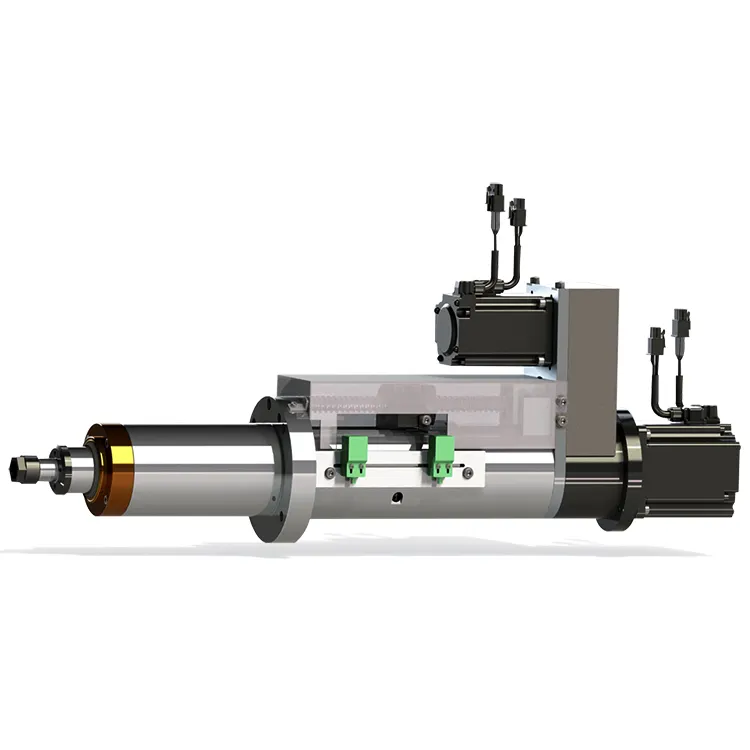
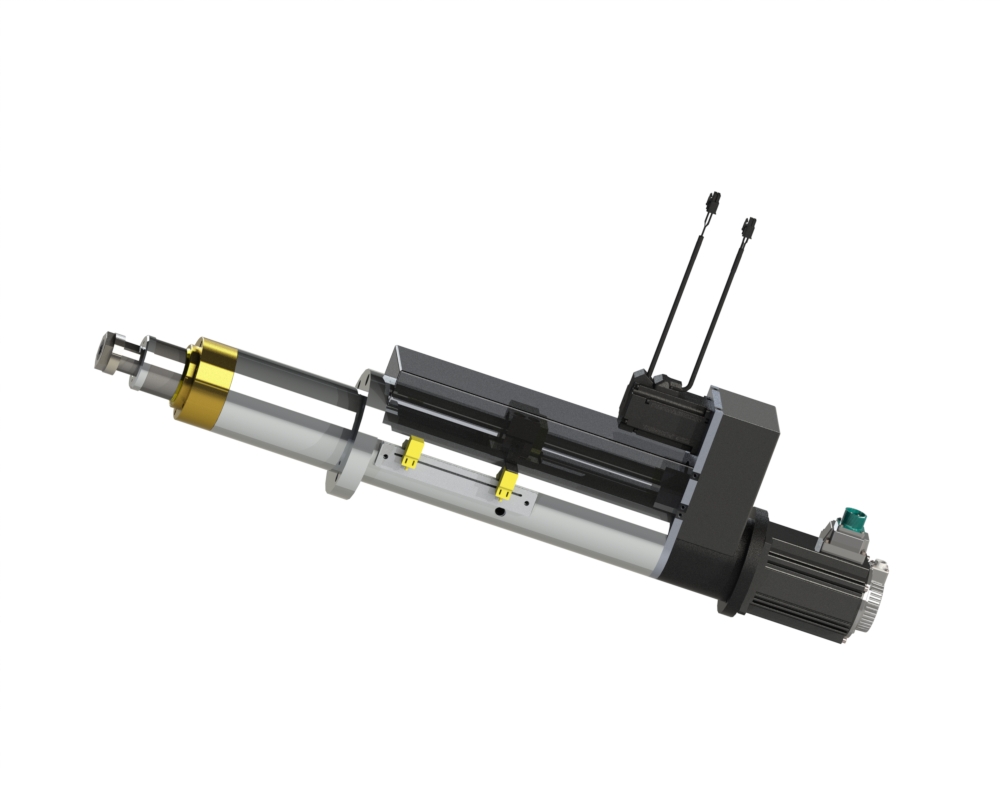
Taking YSA's cutting motor as an example, its spindle cutting unit adopts imported precision bearings and a rigorous dynamic balancing process, ensuring minimal radial and axial runout even at speeds as high as several thousand or even tens of thousands of RPM. This fundamentally guarantees the stability of precision cutting. It is also crucial to select a frequency converter that matches the spindle's rated power and speed range.

summary

     Determining the rotational speed of the cutting motor saw blade is a systematic project. It needs to take the "linear speed" as the core, comprehensively consider the two key dimensions of the saw blade specification and the processing material properties (material and thickness), calculate the reference value through the formula, and then combine the sound and chip state in the actual operation for fine fine fine-tuning. The foundation of all this is a precision equipment like the YSA Italian cutting spindle that can accurately and stably output power. Only by scientifically setting the rotational speed can the best balance of cutting efficiency, quality and tool life be achieved.

related news
View more >>
Electric spindles empower manipulators to deburr: a flexible Electric spindles empower manipulators to deburr: a flexible
04 .19.2026
This paper delves into the significant advantages of integrating high-performance electric spindles into industrial robots for deburring operations. It focuses on analyzing the core value of high-spee...
Application Characteristics of Electric Spindle in Deburring Application Characteristics of Electric Spindle in Deburring
04 .19.2026
This paper deeply explores the core advantages of the electric spindle in the deburring of industrial robots, and analyzes in detail its characteristics such as high speed accuracy, flexible floating,...
Common Causes and Countermeasures for Interrupted Cutting To Common Causes and Countermeasures for Interrupted Cutting To
04 .19.2026
This paper analyzes the common reasons for drilling interruption of tools, including key factors such as tool quality, spindle accuracy, cooling chip removal, processing parameters and workpiece mater...
How to Choose the Right Type of Drill for Different Material How to Choose the Right Type of Drill for Different Material
04 .19.2026
This paper comprehensively discusses how to scientifically select the type of drill bit for metal, non-metal and composite materials, analyzes in detail the characteristics of different materials and ...
We use cookie to improve your online experience. By continuing to browse this website, you agree to our use of cookie.

Cookies

Please read our Terms and Conditions and this Policy before accessing or using our Services. If you cannot agree with this Policy or the Terms and Conditions, please do not access or use our Services. If you are located in a jurisdiction outside the European Economic Area, by using our Services, you accept the Terms and Conditions and accept our privacy practices described in this Policy.
We may modify this Policy at any time, without prior notice, and changes may apply to any Personal Information we already hold about you, as well as any new Personal Information collected after the Policy is modified. If we make changes, we will notify you by revising the date at the top of this Policy. We will provide you with advanced notice if we make any material changes to how we collect, use or disclose your Personal Information that impact your rights under this Policy. If you are located in a jurisdiction other than the European Economic Area, the United Kingdom or Switzerland (collectively “European Countries”), your continued access or use of our Services after receiving the notice of changes, constitutes your acknowledgement that you accept the updated Policy. In addition, we may provide you with real time disclosures or additional information about the Personal Information handling practices of specific parts of our Services. Such notices may supplement this Policy or provide you with additional choices about how we process your Personal Information.


Cookies

Cookies are small text files stored on your device when you access most Websites on the internet or open certain emails. Among other things, Cookies allow a Website to recognize your device and remember if you've been to the Website before. Examples of information collected by Cookies include your browser type and the address of the Website from which you arrived at our Website as well as IP address and clickstream behavior (that is the pages you view and the links you click).We use the term cookie to refer to Cookies and technologies that perform a similar function to Cookies (e.g., tags, pixels, web beacons, etc.). Cookies can be read by the originating Website on each subsequent visit and by any other Website that recognizes the cookie. The Website uses Cookies in order to make the Website easier to use, to support a better user experience, including the provision of information and functionality to you, as well as to provide us with information about how the Website is used so that we can make sure it is as up to date, relevant, and error free as we can. Cookies on the Website We use Cookies to personalize your experience when you visit the Site, uniquely identify your computer for security purposes, and enable us and our third-party service providers to serve ads on our behalf across the internet.

We classify Cookies in the following categories:
 ●  Strictly Necessary Cookies
 ●  Performance Cookies
 ●  Functional Cookies
 ●  Targeting Cookies


Cookie List
A cookie is a small piece of data (text file) that a website – when visited by a user – asks your browser to store on your device in order to remember information about you, such as your language preference or login information. Those cookies are set by us and called first-party cookies. We also use third-party cookies – which are cookies from a domain different than the domain of the website you are visiting – for our advertising and marketing efforts. More specifically, we use cookies and other tracking technologies for the following purposes:

Strictly Necessary Cookies
These cookies are necessary for the website to function and cannot be switched off in our systems. They are usually only set in response to actions made by you which amount to a request for services, such as setting your privacy preferences, logging in or filling in forms. You can set your browser to block or alert you about these cookies, but some parts of the site will not then work. These cookies do not store any personally identifiable information.

Functional Cookies
These cookies enable the website to provide enhanced functionality and personalisation. They may be set by us or by third party providers whose services we have added to our pages. If you do not allow these cookies then some or all of these services may not function properly.

Performance Cookies
These cookies allow us to count visits and traffic sources so we can measure and improve the performance of our site. They help us to know which pages are the most and least popular and see how visitors move around the site. All information these cookies collect is aggregated and therefore anonymous. If you do not allow these cookies we will not know when you have visited our site, and will not be able to monitor its performance.

Targeting Cookies
These cookies may be set through our site by our advertising partners. They may be used by those companies to build a profile of your interests and show you relevant adverts on other sites. They do not store directly personal information, but are based on uniquely identifying your browser and internet device. If you do not allow these cookies, you will experience less targeted advertising.

How To Turn Off Cookies
You can choose to restrict or block Cookies through your browser settings at any time. Please note that certain Cookies may be set as soon as you visit the Website, but you can remove them using your browser settings. However, please be aware that restricting or blocking Cookies set on the Website may impact the functionality or performance of the Website or prevent you from using certain services provided through the Website. It will also affect our ability to update the Website to cater for user preferences and improve performance. Cookies within Mobile Applications

We only use Strictly Necessary Cookies on our mobile applications. These Cookies are critical to the functionality of our applications, so if you block or delete these Cookies you may not be able to use the application. These Cookies are not shared with any other application on your mobile device. We never use the Cookies from the mobile application to store personal information about you.

If you have questions or concerns regarding any information in this Privacy Policy, please contact us by email at . You can also contact us via our customer service at our Site.


Product Inquiry